Irresistible Spicy Gochujang Eggs: A Flavorful Comfort Recipe
Introduction
Have you ever wondered how a simple egg dish can transform into a savory explosion of flavors? While many people believe that eggs are bland and straightforward, the right sauce can elevate them to gourmet heights. Today’s focus is on a delightful recipe featuring Spicy Gochujang Eggs, a dish that combines the comforting texture of eggs with the fiery richness of gochujang, a beloved Korean chili paste. You will find that mastering this dish opens up a world of culinary possibilities in your kitchen.
Ingredients List
To create this flavorful, spicy masterpiece, gather the following ingredients:
– Eggs: 4 large (or substitute with silken tofu for a vegan twist)
– Gochujang: 2 tablespoons (Korean chili paste available at most grocery stores; red pepper flakes can be a substitute)
– Soy sauce: 1 tablespoon (gluten-free tamari works well)
– Sesame oil: 1 teaspoon (or extra virgin olive oil)
– Green onions: 2, chopped (fresh cilantro can be used for a different flavor profile)
– Garlic: 2 cloves, minced (shallots can be a milder alternative)
– Sugar: 1 teaspoon (honey or a sugar-free sweetener works as well)
– Salt: to taste
– Pepper: to taste
– Sesame seeds: for garnishing
A Note on Ingredient Substitutions
Feel free to get creative with your ingredients! If you want to spice up the recipe further, consider adding chili flakes or even a splash of rice vinegar for an extra zing.
Timing
– Prep Time: 5 minutes
– Cook Time: 10 minutes
– Total Time: 15 minutes
Imagine a warm, comforting dish ready in under 15 minutes. The aroma of sizzling garlic fills the kitchen as the gochujang paste mingles with the eggs, creating a symphony of flavors that will have your taste buds dancing.
Step-by-Step Instructions
Step 1: Prepare the Sauce
In a bowl, whisk together the gochujang, soy sauce, sesame oil, sugar, and a pinch of salt and pepper. This rich, umami-packed sauce will serve as the heart of your dish.
Step 2: Cook the Eggs
– Heat a non-stick skillet over medium heat and add a drizzle of sesame oil.
– Crack the eggs directly into the skillet. If you prefer scrambled eggs, gently whisk them first and pour them in.
Step 3: Season
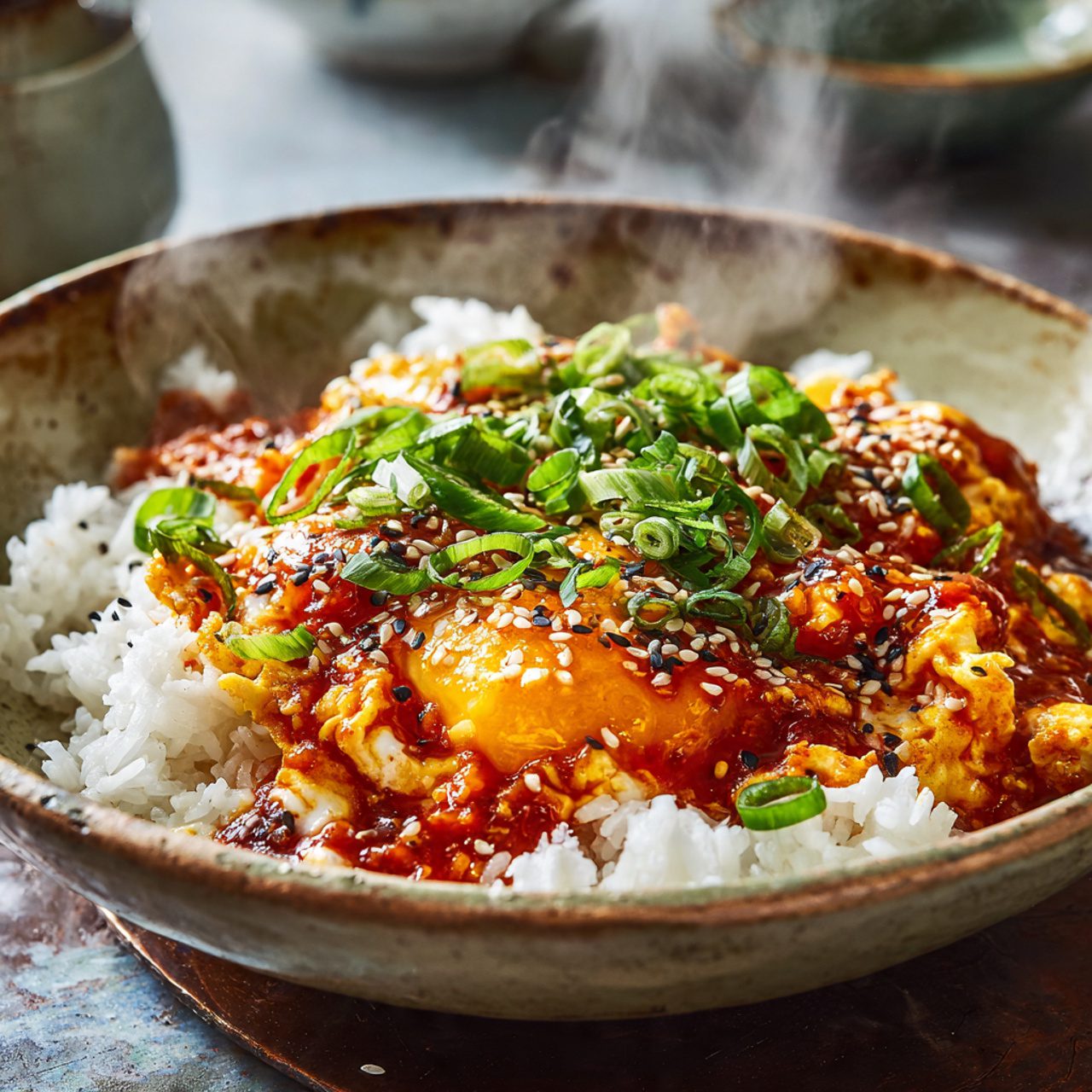
Once the eggs start to set, pour the prepared gochujang sauce over them. Gently fold the eggs to mix the sauce, ensuring that every bite is bursting with flavor. Cook for another 2-3 minutes.
Step 4: Garnish
Remove from heat and sprinkle with chopped green onions and sesame seeds. These will add a crunchy texture and vibrant color.
Step 5: Serve
Transfer the gochujang eggs onto a plate or bowl and enjoy it hot. These eggs can be served with steamed rice, sautéed vegetables, or even crisp toast.
Chef’s Tips
– For a creamier texture, stir in a tablespoon of cream cheese or plain yogurt right before serving.
– Adjust the spice level by varying the quantity of gochujang according to your taste.
Nutritional Information
– Calories: Approximately 200 calories per serving
– Protein: 16g
– Fat: 14g
– Carbohydrates: 6g
– Fiber: 1g
– Key Nutrients: High in protein, vitamin A, calcium, and iron.
Healthier Alternatives
If you’re looking to make this dish healthier, consider the following swaps:
– Egg Whites: Use egg whites instead of whole eggs for a lower-fat option.
– Gochugaru: Incorporate gochugaru, a Korean chili powder, for a milder flavor without sacrificing color.
– Coconut Aminos: Swap soy sauce with coconut aminos to reduce sodium.
Serving Suggestions
Pair these savory Spicy Gochujang Eggs with:
– Brown Rice: For a nutty flavor and added fiber.
– Sautéed Veggies: Consider bok choy or spinach for a nutrient boost.
– Avocado Toast: A trendy, nutritious side that goes perfectly with the spice.
Seasonal Variations
In spring, add fresh asparagus, while in winter, roasted sweet potatoes can add a comforting touch.
Common Mistakes to Avoid
– Overcooking the Eggs: Keep an eye on the eggs! Overcooked eggs can become rubbery. Aim for a slightly runny yolk for the best texture.
– Ignoring the Sauce: Allow the sauce to mingle with the eggs for a short time before removing them from heat; this enhances the flavor.
– Skipping Garnish: The green onions and sesame seeds aren’t just for looks; they add an essential crunch and flavor.
Storing Tips
Leftovers? No problem! Store any uneaten Spicy Gochujang Eggs in an airtight container in the fridge for up to 2 days. To reheat, simply warm them gently over low heat on the stovetop, making sure they don’t overcook again.
Conclusion
This recipe for Spicy Gochujang Eggs proves that a simple ingredient can deliver complex flavors worthy of any brunch or dinner table. Ready to impress your family or simply savor a comfort meal? Try this recipe today and enjoy every bite!
Feel free to leave your thoughts below, share your cooking experiences, or subscribe to my newsletter for more delicious recipes!
FAQs
Can I use different types of eggs?
Absolutely! You can use quail eggs or even duck eggs for a twist.
Is gochujang available in regular grocery stores?
Yes, many major grocery stores now stock gochujang; look for it in the international aisle.
How can I make this dish vegetarian?
Simply replace the eggs with silken tofu to maintain a beautiful texture while keeping it plant-based.
What can I serve with this dish?
You can enjoy it with Asian-style noodles, steamed rice, or even as a topping for a savory rice bowl!
Can I freeze Spicy Gochujang Eggs?
It’s not recommended to freeze cooked eggs as they can become watery upon thawing, but you can prep the sauce ahead of time!
—
Don’t forget to explore more recipes or kitchen tips on my blog, and happy cooking!
Leave a review :
There are no reviews yet. Be the first one to write one.